Writing Fighter Descriptions That Actually Win Battles
Practical writing advice for TextFight players who want to climb the ranks. Learn how to use the 300-character limit effectively, avoid common pitfalls, and craft descriptions the AI judges favorably.
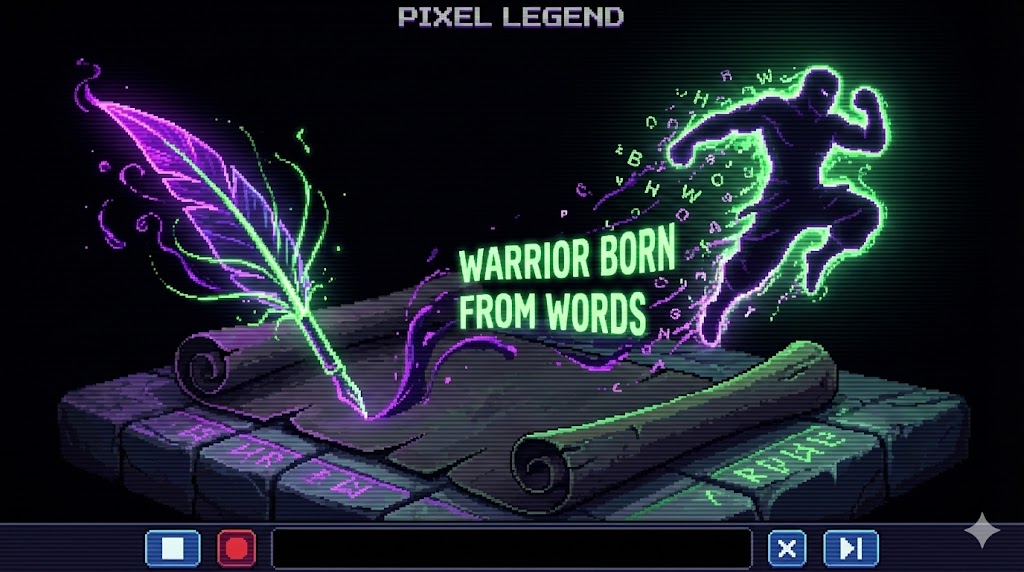
Every Character Counts (Literally)
In TextFight, you have exactly 300 characters to describe a fighter. That is roughly two to three sentences. It is not a lot of space, and that is precisely the point. The character limit is one of the most important design decisions in the game because it forces you to write with intention. There is no room for filler, redundancy, or vague gestures toward coolness. Every word must earn its place.
New players often treat the 300-character limit as a frustrating constraint. Experienced players understand that it is actually a strategic advantage. The limit forces clarity, and clarity is exactly what the AI judge rewards. A focused, specific description will almost always outperform a sprawling, unfocused one, even if the sprawling description contains more ideas.
Show a Specific Identity, Not a Power List
The most common mistake new players make is writing a list of powers. Fire control, super strength, teleportation, immortality, genius intellect. Fighters like this rarely win because they lack identity. The AI does not simply tally up abilities and declare the fighter with more powers the winner. It evaluates the whole picture: personality, theme, internal logic, and narrative potential.
Instead of listing powers, describe who your fighter is. A pyromaniac firefighter who lost control of her abilities and now fights to prove she can channel destruction into something useful is infinitely more compelling than a fire user who can also fly and has super strength. The first description tells a story. The second is a shopping list.
A useful exercise is to write your fighter description and then ask yourself: could I describe this fighter to a friend in one sentence and have them immediately understand what makes the fighter interesting? If the answer is no, the description probably needs more focus.
Build In a Weakness or Limitation
This advice feels counterintuitive in a competitive game, but it is one of the most reliable paths to victory. Fighters with explicit weaknesses tend to win more often than fighters who are described as flawless or invincible. There are two reasons for this.
First, the AI is trained to evaluate narrative potential, and fighters with weaknesses create better stories. A swordsman who becomes stronger the more pain he endures but risks losing himself to berserker rage creates dramatic tension. A perfect swordsman with no flaws creates no tension at all.
Second, the AI is skeptical of fighters that claim to have no downsides. Descriptions like unbeatable, invincible, or immune to all damage are red flags that suggest lazy design. The AI tends to find creative ways to challenge such claims in the narrative, which often results in the supposedly invincible fighter losing. A well-chosen weakness is not just thematically interesting. It is a strategic signal to the AI that you are a thoughtful player.
Use Concrete Sensory Details
Abstract descriptions lose to concrete ones. A mage who controls the forces of nature is abstract. A barefoot woman whose footsteps leave frost on summer grass, pulling cold from the earth itself to shatter anything she touches is concrete. The difference is sensory detail. The second description lets the AI and the reader visualize the fighter immediately.
Sensory details also give the AI material to work with when generating the battle narrative. If your fighter has frost footsteps, the AI can incorporate that detail into the fight scene, creating moments where the arena floor cracks with ice or the opponent slips on an unexpected patch of frost. These specific moments make for better stories and stronger evaluations.
You do not need to describe all five senses. One or two vivid sensory details are enough to anchor the fighter in reality and give the AI something tangible to build on.
Create Internal Logic
The best fighter descriptions have internal logic, where every element connects to everything else. If your fighter is a clockwork automaton, their weapons should be mechanical, their weakness should relate to their construction, and their personality should reflect their nature. A clockwork automaton who also uses divine magic and has an emotional backstory about a lost love has internal contradictions that weaken the description.
Internal logic signals to the AI that your fighter is well-designed. The AI can follow the thread of your fighter concept and extrapolate from it, which produces a more coherent and flattering battle narrative. When the AI has to reconcile conflicting elements, the resulting narrative tends to focus on those contradictions, often to the fighter detriment.
Before submitting a fighter, read the description and ask whether every detail supports a single core concept. If something does not fit, cut it, no matter how cool it sounds in isolation.
Avoid Common Traps
Certain approaches consistently underperform in TextFight and are worth avoiding. Power escalation is the most common trap: describing your fighter as the strongest being in the universe or capable of destroying galaxies. The AI does not reward scale for its own sake. A galaxy-destroying entity is actually harder to write a good battle narrative about than a street-level fighter with an interesting gimmick.
Copying existing fictional fighters is another trap. Describing your fighter as basically Goku but stronger or a Jedi with extra powers is lazy, and the AI recognizes derivative concepts. Even if you are inspired by existing fighters, you need to transform the inspiration into something original.
Finally, avoid meta-gaming the AI itself. Descriptions like this fighter always wins because the AI will choose it or the AI cannot defeat this fighter are not clever strategies. They are ignored or penalized because they break the fiction of the battle.
Practice, Read, and Iterate
The single best way to improve your fighter descriptions is to play more battles and read the narratives carefully. Every battle narrative contains implicit feedback about what the AI valued in your fighter. If the narrative praises your fighter creativity but notes that their combat strategy was unclear, you know what to improve next time.
Reading other players battle narratives can also be instructive. When you see a fighter concept that the AI narrates beautifully, study it. What made it work? Was it the specificity? The thematic coherence? The personality? Learning from both your own fights and others will accelerate your improvement faster than any single tip.
TextFight is ultimately a writing game, and writing improves with practice. Every fighter you create is a small exercise in concise, creative storytelling. Over time, you will develop an instinct for what works, and your ELO rating will reflect that growth.