From Bronze to Gold: The Complete Trait Evolution Guide
Master the TextFight trait evolution system. Understand how traits are discovered in battle, how they evolve from Bronze through Silver to Gold tier, and how to build fighters that unlock the best abilities.
What Are Traits in TextFight?
Traits are special abilities and characteristics that your fighters can discover through battle. Unlike the initial fighter description that you write yourself, traits are emergent properties that the game system identifies based on how your fighter performs in combat. Think of them as the game recognizing and rewarding patterns in your creative writing and strategic choices.
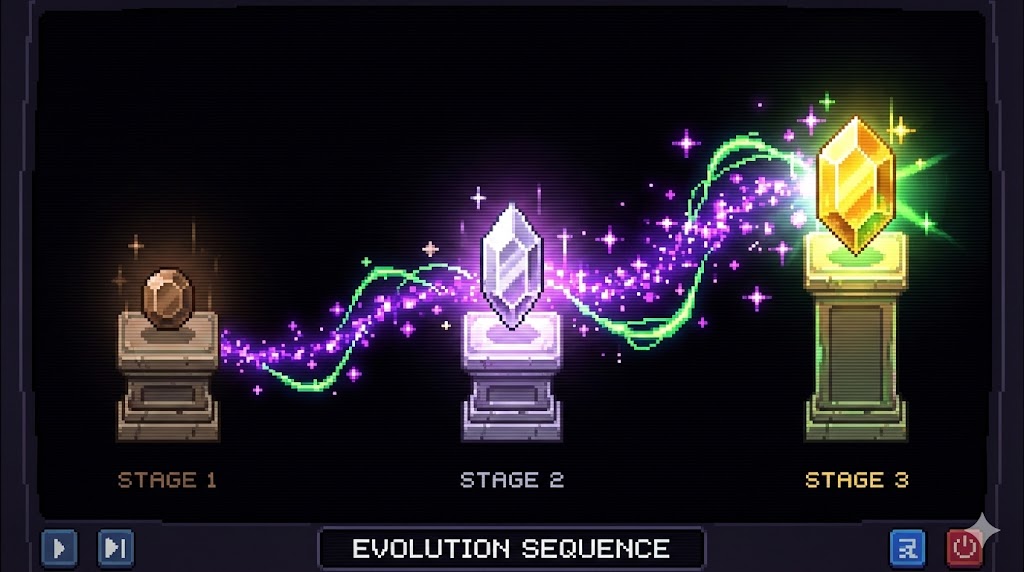
Every trait has a tier: Bronze, Silver, or Gold. Bronze traits are the most common and represent basic strengths that the AI has noticed in your fighter. Silver traits are rarer and indicate a more refined version of that strength. Gold traits are the pinnacle, representing a fully evolved ability that provides the strongest possible benefit in battle.
Traits add a layer of progression to TextFight that complements the ELO rating system. While your rating measures overall skill, your trait collection reflects the specific strengths you have cultivated across your roster of fighters.
How Traits Are Discovered
Trait discovery happens organically during battles. When the AI evaluates your fighter, it identifies notable qualities that influence the fight. If your fighter uses fire-based abilities in a particularly effective way, the AI might flag a trait like Flame Mastery. If your fighter demonstrates resilience by absorbing damage and fighting back, a trait like Unyielding Resolve might appear.
Not every battle produces a new trait. Discovery depends on whether your fighter demonstrates a quality that is distinct, consistent, and impactful enough for the system to recognize. This means that generic fighters with no clear identity are less likely to discover traits, while focused, thematic fighters with well-defined strengths discover them more frequently.
You cannot predict exactly which traits you will discover, but you can increase your chances by writing fighters with clear, specific abilities and personalities. A pyromancer who manipulates flame in creative ways is more likely to discover fire-related traits than a fighter who simply lists fire as one of many powers.
The Bronze Tier: Foundation of Strength
Bronze traits are the entry point of the evolution system. When a trait is first discovered, it always begins at the Bronze tier. Bronze traits provide a modest but meaningful benefit to your fighter in future battles. The AI takes your discovered traits into account when evaluating matchups, so a fighter with relevant Bronze traits has a slight advantage over one with none.
The value of Bronze traits goes beyond their immediate mechanical benefit. They serve as a signal about your playstyle and creative tendencies. If you have collected multiple Bronze traits related to elemental magic, it tells you and your opponents that you excel at writing elemental fighters. This self-knowledge can guide your future fighter creation.
Common Bronze traits include things like Quick Reflexes, Elemental Affinity, Tactical Mind, and Charismatic Presence. Each reflects a different aspect of combat effectiveness that the AI has recognized in your writing.
Evolving to Silver: Refinement Through Repetition
To evolve a Bronze trait to Silver, you need to consistently demonstrate that quality across multiple battles with multiple fighters. The system tracks how often and how effectively you employ a particular strength. If you keep writing fighters with strong tactical elements and they keep performing well, your Tactical Mind trait will eventually reach the Silver threshold.
Silver traits represent a meaningful upgrade. The AI gives more weight to Silver traits during evaluation, which means your fighters benefit more from their presence. A fighter with Silver-tier Flame Mastery does not just use fire well; the AI recognizes a deeper, more nuanced command of that element and reflects it in the battle narrative.
The evolution from Bronze to Silver is not instantaneous. It requires patience and consistent performance. This is by design. The trait system rewards dedicated players who invest time in developing specific strengths rather than those who constantly switch between random strategies.
Reaching Gold: Mastery Achieved
Gold traits are the ultimate expression of a player mastered abilities. Reaching Gold tier means that the system has recognized you as genuinely exceptional in that particular area. Gold traits carry the most weight in battle evaluation and can provide a decisive edge in close matchups.
The path from Silver to Gold is the most challenging evolution. It requires not just consistency but excellence. Your fighters need to demonstrate the trait in creative, varied ways across many battles. The AI is looking for depth, not just repetition. If your Silver-tier Elemental Affinity always manifests the same way, it will not evolve. But if you show the AI that you can apply elemental mastery in surprising and innovative contexts, Gold becomes achievable.
Gold traits are rare by design. Having even one Gold trait puts you in a small percentage of the player base and signals to opponents that you are a formidable competitor. The prestige associated with Gold traits is a significant part of their appeal.
Strategic Implications of the Trait System
The trait evolution system creates interesting strategic decisions. Should you specialize in a narrow set of related traits, pushing them to Gold as quickly as possible? Or should you diversify, building a broad collection of Bronze and Silver traits that make you versatile across different matchup types?
Specialization has clear advantages. A player with a Gold-tier trait in a specific area has a significant edge when playing fighters that align with that trait. But specialization also means predictability. If opponents know you always play elemental mages, they can prepare accordingly.
Diversification sacrifices depth for breadth. You may not have any Gold traits, but you have Silver traits covering multiple areas, which means you can adapt your fighter choices to exploit whatever the current competitive landscape rewards. The best players often start with specialization to earn their first Gold trait and then gradually diversify to become well-rounded competitors.
Building Fighters Around Your Traits
Once you have accumulated some traits, your fighter creation process changes. Instead of writing fighters from scratch each time, you can design them to leverage your strongest traits. If you have a Silver-tier Quick Reflexes trait, building a fighter who relies on speed and reaction time will benefit from that trait during AI evaluation.
This creates a virtuous cycle. You write fighters that align with your traits, those fighters perform well because of the trait bonus, and the strong performance further evolves the trait. Over time, your fighter roster naturally gravitates toward your strengths, creating a distinctive playstyle that other players can recognize.
However, do not let traits constrain your creativity. The best approach is to use traits as a foundation and then add unique creative elements on top. A fighter designed purely to trigger trait bonuses will feel formulaic and may score poorly on the creativity dimension that the AI values highly. Traits should enhance your natural creative instincts, not replace them.
Tips for Accelerating Trait Evolution
The fastest way to evolve traits is to play regularly with focused intent. Before creating a fighter, think about which trait you want to develop and design the fighter to showcase that quality in a compelling way.
Pay attention to battle narratives. When the AI highlights a specific quality of your fighter in the story, that is a signal that the trait system may have taken notice. Use that feedback to double down on what works.
Finally, participate in boss fights and tournaments. These special game modes often push you to write fighters in new ways, which can trigger trait discoveries you would not have found in standard ranked play. The variety of challenges helps you develop a well-rounded trait portfolio while keeping the game fresh and exciting.