Boss Fight Strategies Every Beginner Should Know
New to TextFight boss fights? Learn how boss mechanics differ from standard battles, which fighter approaches work best, and how to turn your first boss victory into a stepping stone for ranked success.
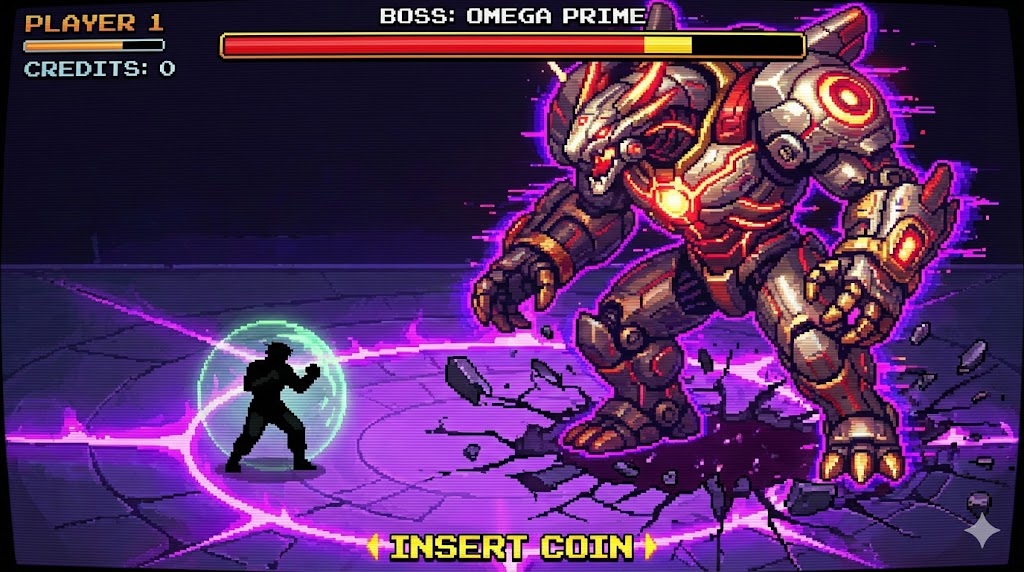
What Makes Boss Fights Different
Standard TextFight battles pit two player-created fighters against each other in a fair matchup. Boss fights break that symmetry. In a boss fight, you are facing a pre-designed opponent with unique traits, specific mechanics, and often a thematic gimmick that changes how the battle is evaluated. Bosses are designed to be challenging, and they require a different strategic approach than regular ranked matches.
The most important difference is that bosses have defined traits that are visible to you before the fight. You know what you are up against. This transforms the challenge from a blind matchup into a puzzle. Your job is to craft a fighter specifically designed to exploit the boss weaknesses while surviving their strengths.
Boss fights also offer unique rewards. Defeating a boss can unlock special traits, boost your ELO rating by a larger-than-normal amount, or grant cosmetic recognition on your profile. These rewards make boss fights worth pursuing even if you find them more difficult than standard battles.
Read the Boss Description Carefully
This advice sounds obvious, but many beginners rush into boss fights without fully analyzing the boss fighter. Every boss in TextFight has a detailed description that includes their abilities, personality, fighting style, and often a subtle hint about their vulnerability. Reading this description carefully and more than once is the first step toward victory.
Look for specific details that suggest a weakness. A boss described as drawing power from absolute silence might be vulnerable to a fighter who fights with sonic attacks or constant noise. A boss whose strength depends on unwavering confidence might crumble against a fighter who specializes in psychological manipulation. These connections are rarely spelled out explicitly but are embedded in the boss design for attentive players to discover.
Take notes if it helps. Write down the boss key traits, their apparent strengths, and any language that hints at vulnerability. Then use those notes to guide your fighter creation.
Design Your Fighter as a Counter
In standard ranked play, you create fighters that are generally strong. In boss fights, you create fighters that are specifically strong against this particular boss. This distinction is critical. A generalist fighter that performs well in ranked matches may struggle against a boss designed with a specific mechanic, while a specialist fighter tailored to counter the boss can achieve a convincing victory.
Counter-building does not mean simply describing a fighter who is immune to the boss powers. That approach is too blunt and often scores poorly on creativity. Instead, think about thematic counters. If the boss is a creature of shadow, your fighter might be a lighthouse keeper who carries a lamp fueled by personal sacrifice. The thematic connection between light and shadow creates a narrative the AI finds compelling while also providing a strategic justification for your fighter advantage.
The best counter-builds feel organic rather than forced. They should read as a complete, interesting fighter in their own right who happens to have qualities that match up well against the boss.
Do Not Abandon Creativity for Strategy
A common beginner mistake in boss fights is becoming so focused on strategy that the fighter description loses all creative flair. You might write something like a fighter who is immune to fire, has anti-magic armor, and cannot be deceived because the boss uses fire, magic, and deception. Technically this description counters the boss, but it reads like a checklist, not a fighter.
The AI still evaluates creativity in boss fights. A counter-build that is also creative, with a compelling personality, vivid sensory details, and internal logic, will outperform a counter-build that is purely mechanical. Think of it as needing to pass two tests: the strategic test of matching up well against the boss, and the creative test of being an interesting fighter in your own right.
If you find yourself struggling to combine strategy and creativity, start with the creative concept and then adjust it to address the boss. It is easier to add strategic elements to a creative fighter than to add creativity to a strategic checklist.
Learn from Losses
You will probably lose your first few boss fights, and that is perfectly normal. Bosses are designed to be harder than standard opponents, and part of the game is learning from failure. When you lose a boss fight, read the battle narrative carefully. The AI will explain why your fighter fell short, and that explanation contains valuable information for your next attempt.
Common reasons for boss fight losses include failing to address the boss primary mechanic, writing a fighter that was too generic to exploit the boss specific weaknesses, or over-specializing to the point where the fighter lost creative depth. Identifying which of these problems affected you is the key to improving on your next attempt.
Many experienced players keep a mental or written log of their boss fight attempts, noting what worked and what did not. Over time, this builds an intuition for boss fight design that translates into faster victories and more efficient use of your battle attempts.
Use Boss Fights to Grow as a Player
Boss fights are not just obstacles to overcome. They are some of the best training available in TextFight. Because bosses have defined traits and mechanics, they force you to think strategically about fighter design in a way that standard random matchups do not. This strategic thinking carries over into ranked play, where you can apply the same analytical approach to anticipating what types of fighters you might face.
Boss fights also push you to write outside your comfort zone. If you always create elemental mages in ranked play, a boss that is immune to elemental damage forces you to explore other creative spaces. This diversification makes you a more versatile and unpredictable player in all modes.
Finally, boss fights are a great way to discover new traits. The unique conditions of boss battles often trigger trait discoveries that standard battles would not, expanding your trait portfolio and giving you more tools for future competition. Treat every boss fight as both a challenge and an opportunity.